
Case Study
Kickstarting An Economy with 4 New Features
Context
Spatial is a platform enabling creators & businesses to quickly build and share 3D digital spaces across web, mobile, & VR.
Description
In Q1 '23, the strategy team identified that creators were struggling to monetize their spaces, leading to departures from the platform. At the same time, the team also discovered that spaces with a 'game-loop' had 7x higher retention than those without. This insight sparked the six-month 'Spatial Economy' initiative to develop infrastructure for creator earnings while encouraging the creation of 'game-loop' spaces.
Role
Product Designer
Timeline
Q1 23' - Q2 23'
Company
Team
Designer(s)
Jayson Hahn
Jimmy Shan
Yoonwoo Lee
3
PDs
Stack

Figma
Figma
Impact
12x Retention
Case Study
Kickstarting An Economy with 4 New Features
Context
Spatial is a platform enabling creators & businesses to quickly build and share 3D digital spaces across web, mobile, & VR.
Description
In Q1 '23, the strategy team identified that creators were struggling to monetize their spaces, leading to departures from the platform. At the same time, the team also discovered that spaces with a 'game-loop' had 7x higher retention than those without. This insight sparked the six-month 'Spatial Economy' initiative to develop infrastructure for creator earnings while encouraging the creation of 'game-loop' spaces.
Role
Product Designer
Timeline
Q1 23' - Q2 23'
Company
Team
Designer(s)
Jayson Hahn
Jimmy Shan
Yoonwoo Lee
3
PDs
Stack
Figma
Figma
Impact
12x Retention
SAN FRANCISCO, CA
COPYRIGHT JAYSon.STUDIO 2025
Inventory System

0:00/1:34
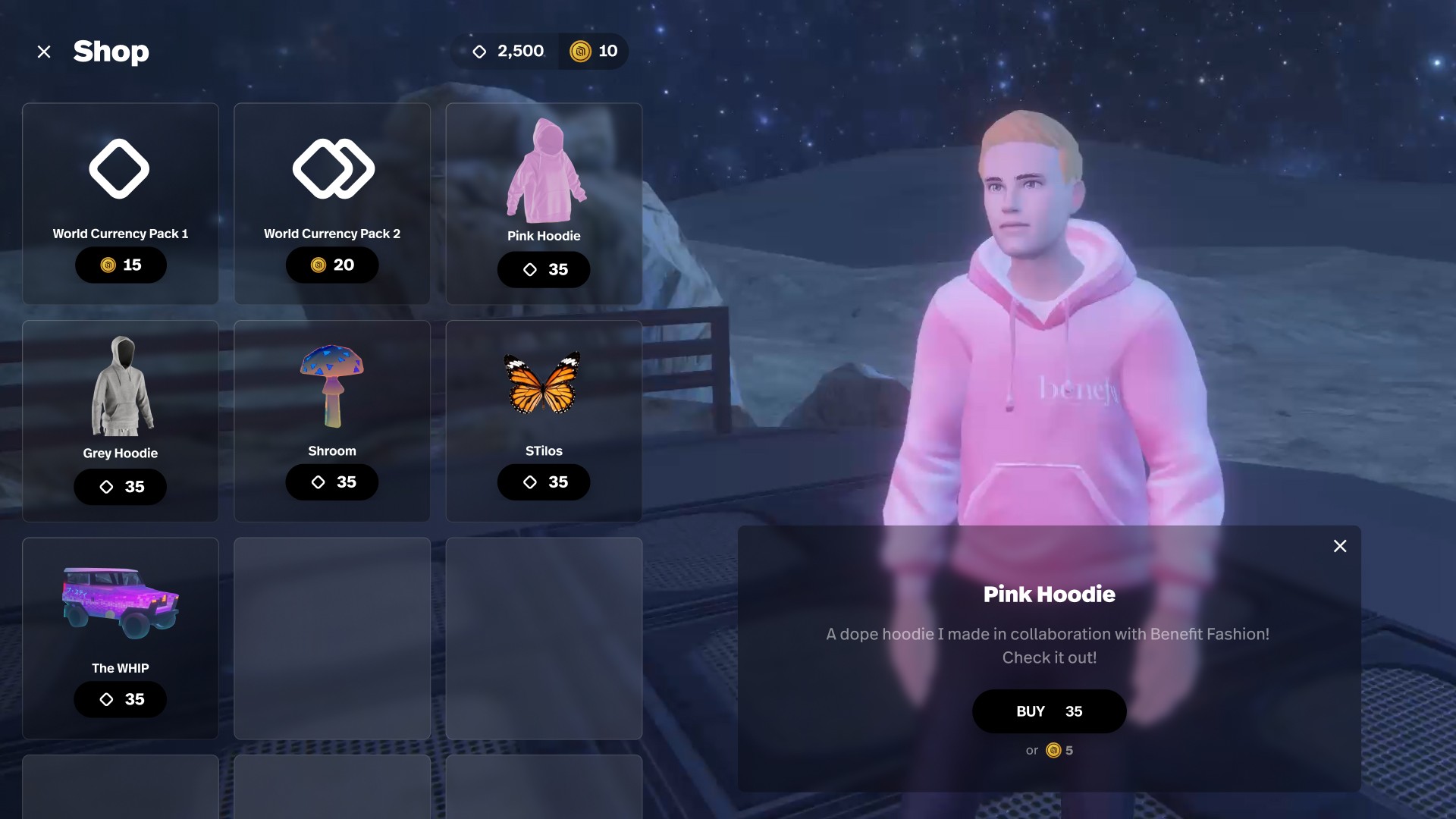
In-Space Shop
0:00/1:34
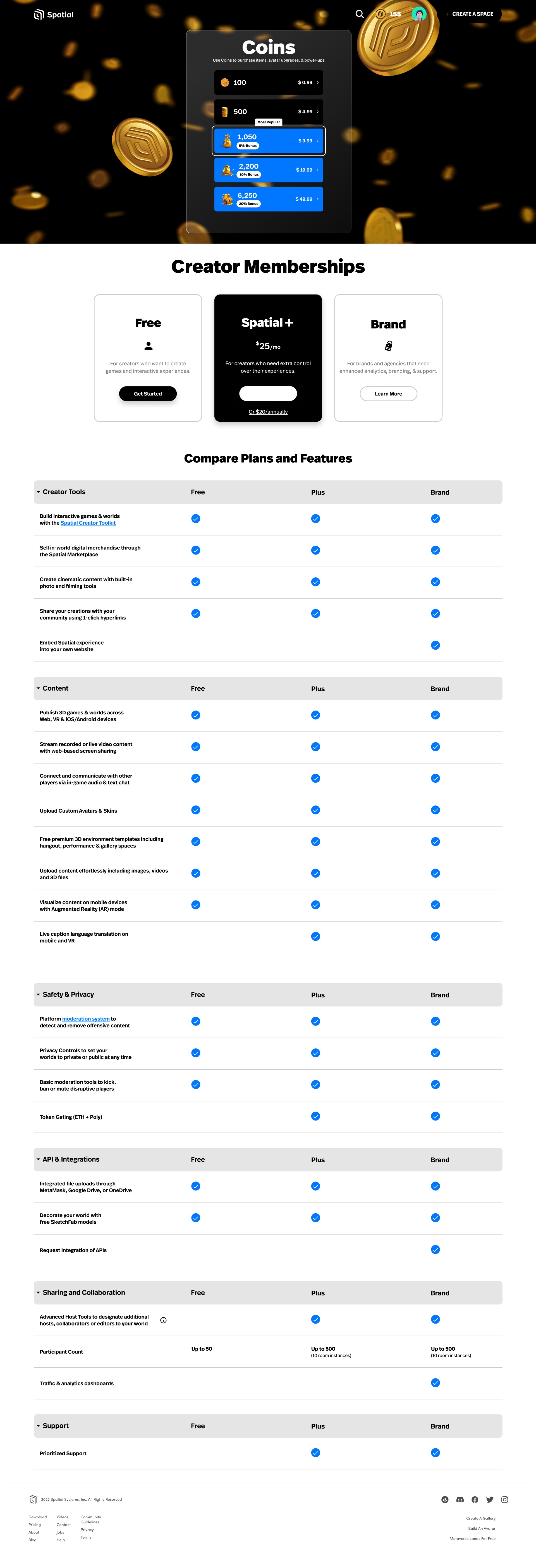
Spatial Coins
0:00/1:34
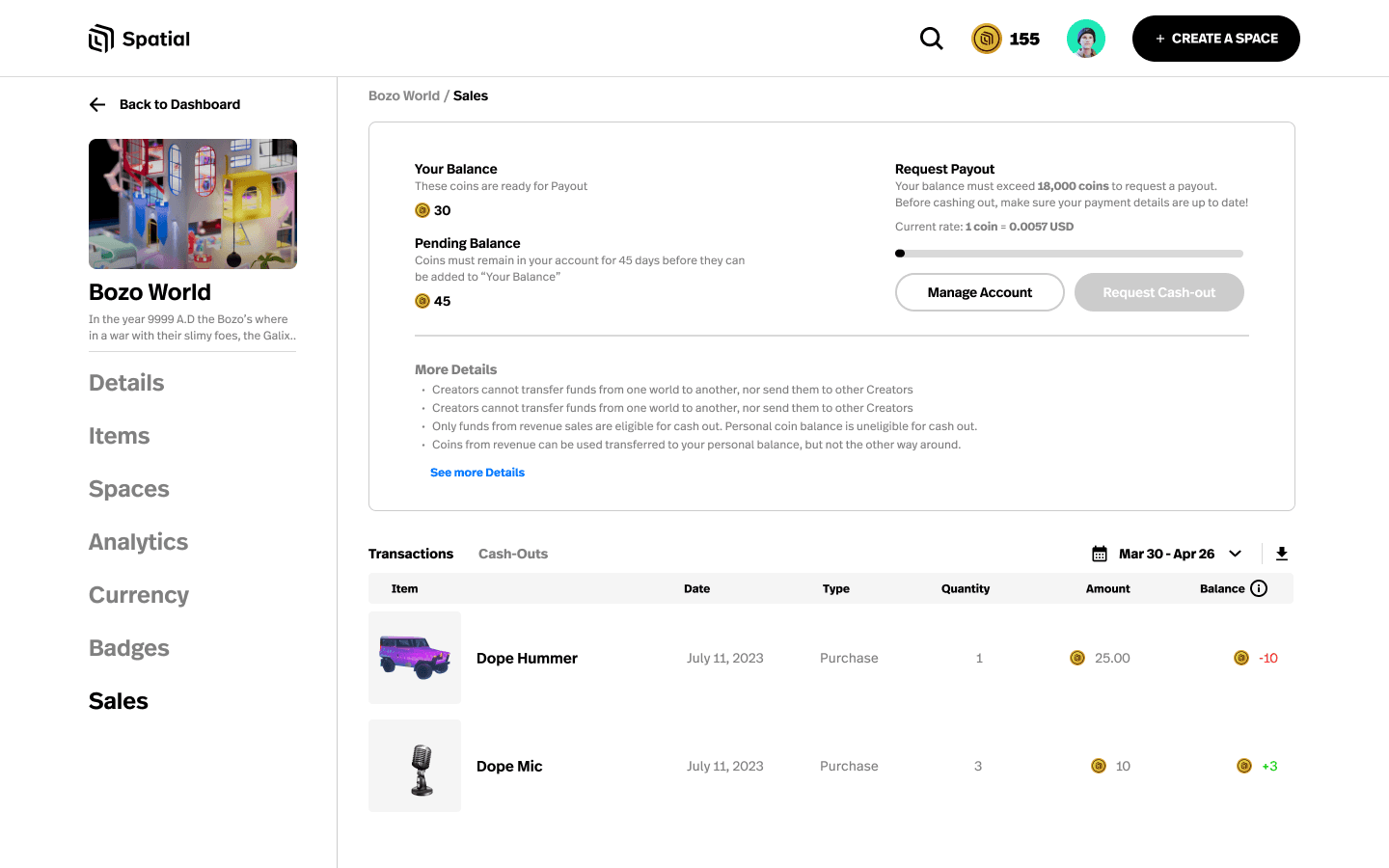
Spatial Studio
0:00/1:34
Connect to Content
Add layers or components to make infinite auto-playing slideshows.
Pain Point
Creators are unsuccessfully attempting to monetize their spaces. As a result, they are finding it harder to justify their efforts and are gradually departing from the platform.
Goal
Develop the infrastructure to help creators earn more money from their spaces and incentivize creating.
Phase 1
Provide creators with the tools to introduce more 'game-loops' into their spaces by allowing them to reward visitors who make progress.
Phase 2
Provide creators with the ability to monetize their game loops by providing opportunities for micro-transactions.
Phase 3
Maintenance and port to mobile
Audit
How do other platforms address these challenges, and how do their approaches differ from Spatial's?
Competitive Analysis
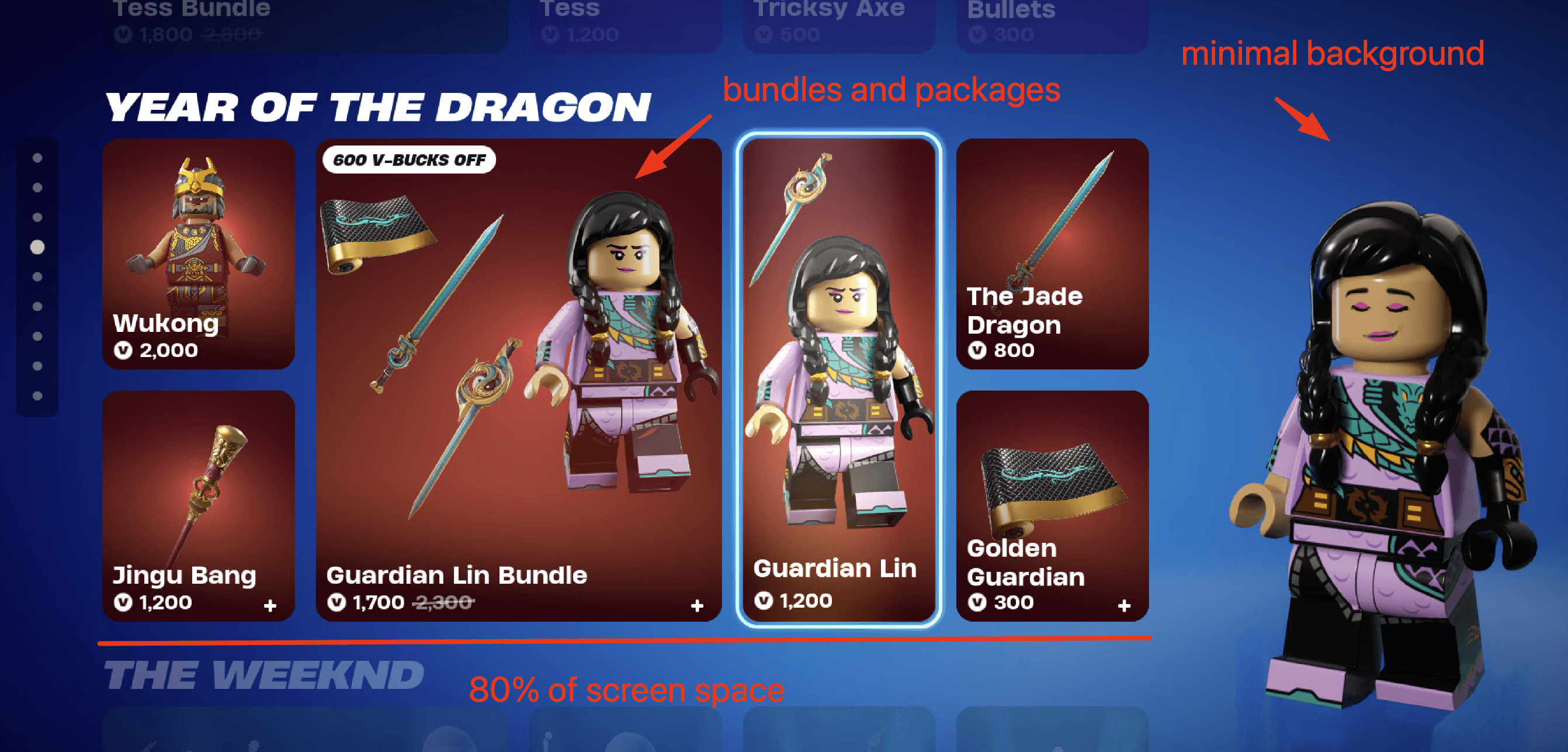
Fortnite Store Audit
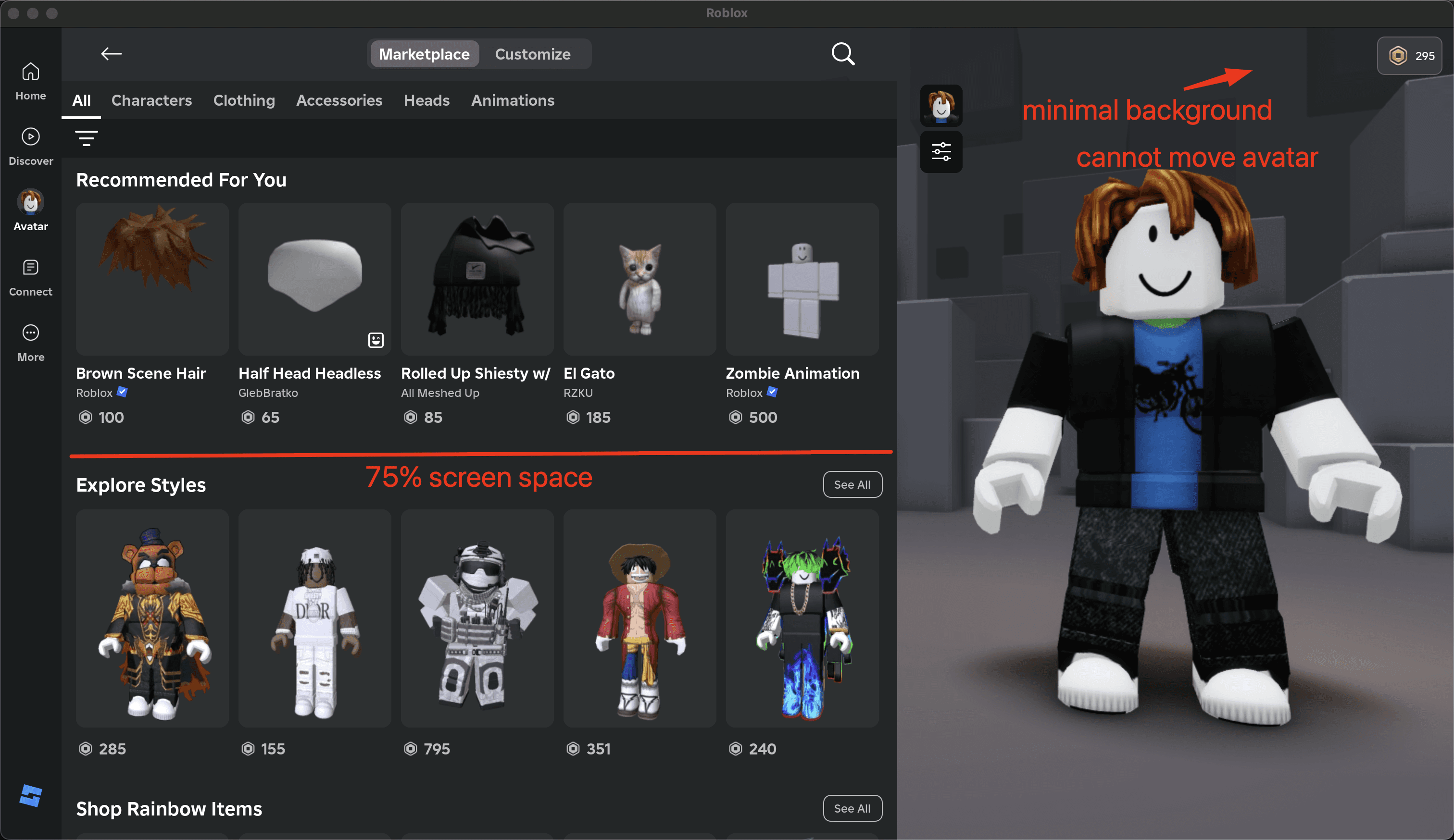
Roblox Marketplace Audit
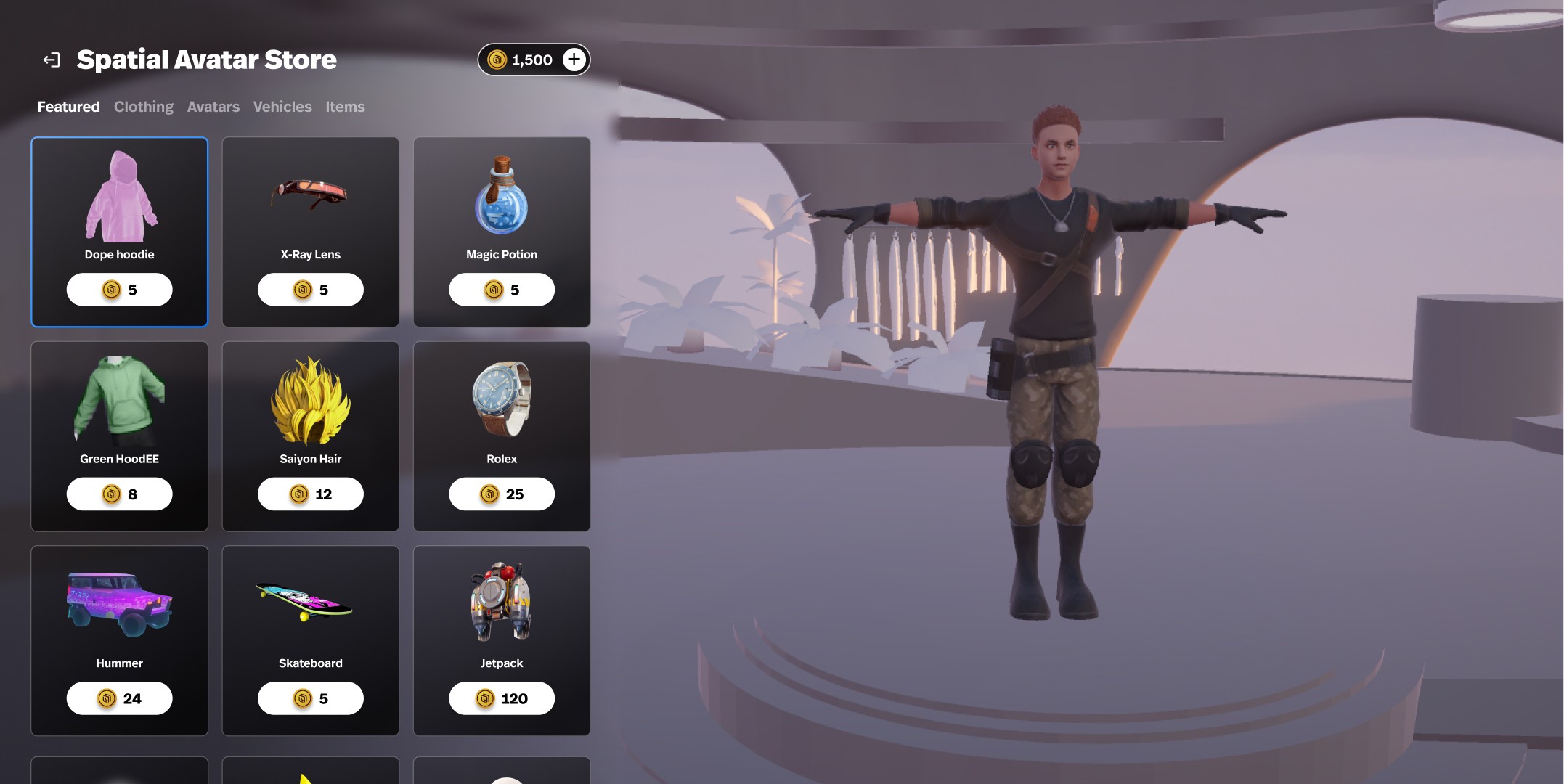
Recording of Spatial's current highest-performing shopping experience.
Fortnite Store Audit
Roblox Marketplace Audit
Recording of Spatial's current highest-performing shopping experience.
Fortnite Store Audit
Roblox Marketplace Audit
Recording of Spatial's current highest-performing shopping experience.
Fortnite Store Audit
Roblox Marketplace Audit
Recording of Spatial's current highest-performing shopping experience.
Insights
Roblox is a 2D shopping experience & sells "global" items only.
The marketplace sells only "global" items—usable across all experiences, not just one. It focuses on individual items, with secondary emphasis on how they relate to the avatar. The minimal background and fixed avatar navigation keep users focused on shopping rather than space discovery.
Fortnite only sells global items but hyper focuses on item bundles.
Similar to Roblox in structure and biasing toward highlighting items as well as only sells "global" items. Unlike Roblox, Fortnite is heavily biased towards item "bundles" rather than individual items.
Navigating Spatial's 3D shopping experience adds friction to sales.
Shopping experiences often require users to run from item to item in 3D space. While this provides a unique shopping experience - it is inefficient for rapid item discovery and quick sales conversion.
Development
Focused Direction
Increase sales by limiting space navigation and increasing focus on global item discovery.
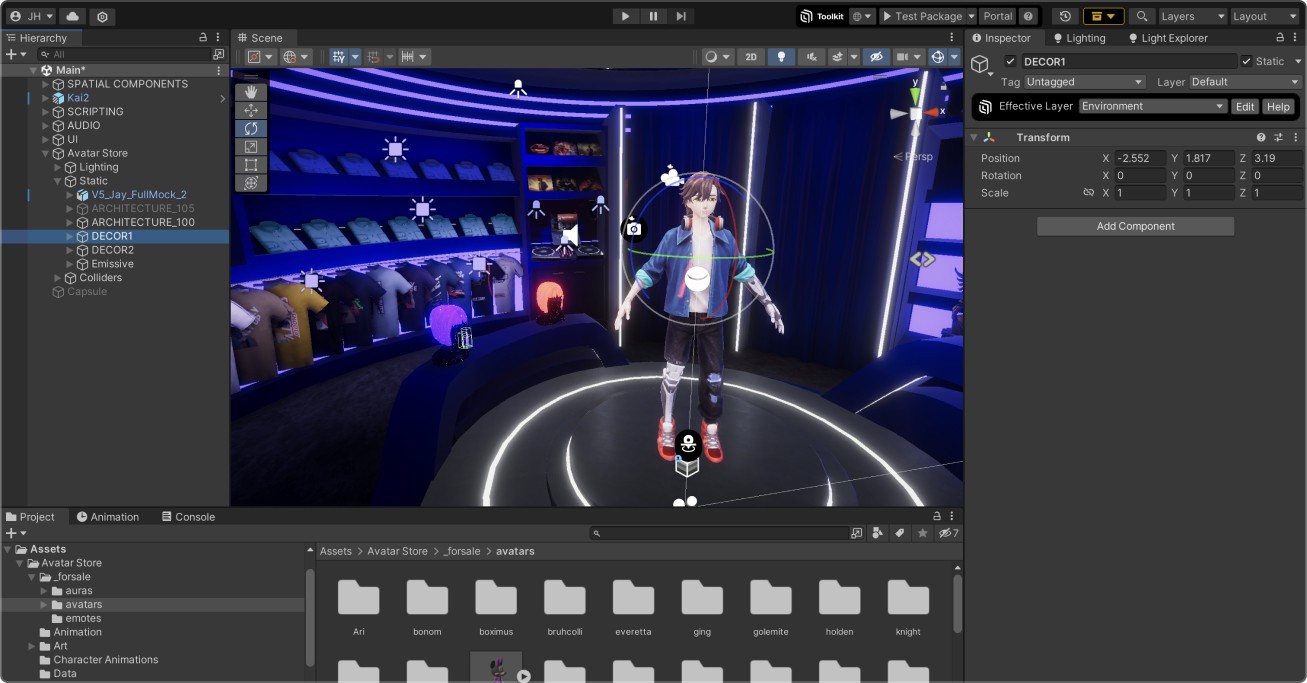
Texturing, lighting, and game development all occurred within Unity game engine.
Revised architecture after initial grey box feedback.
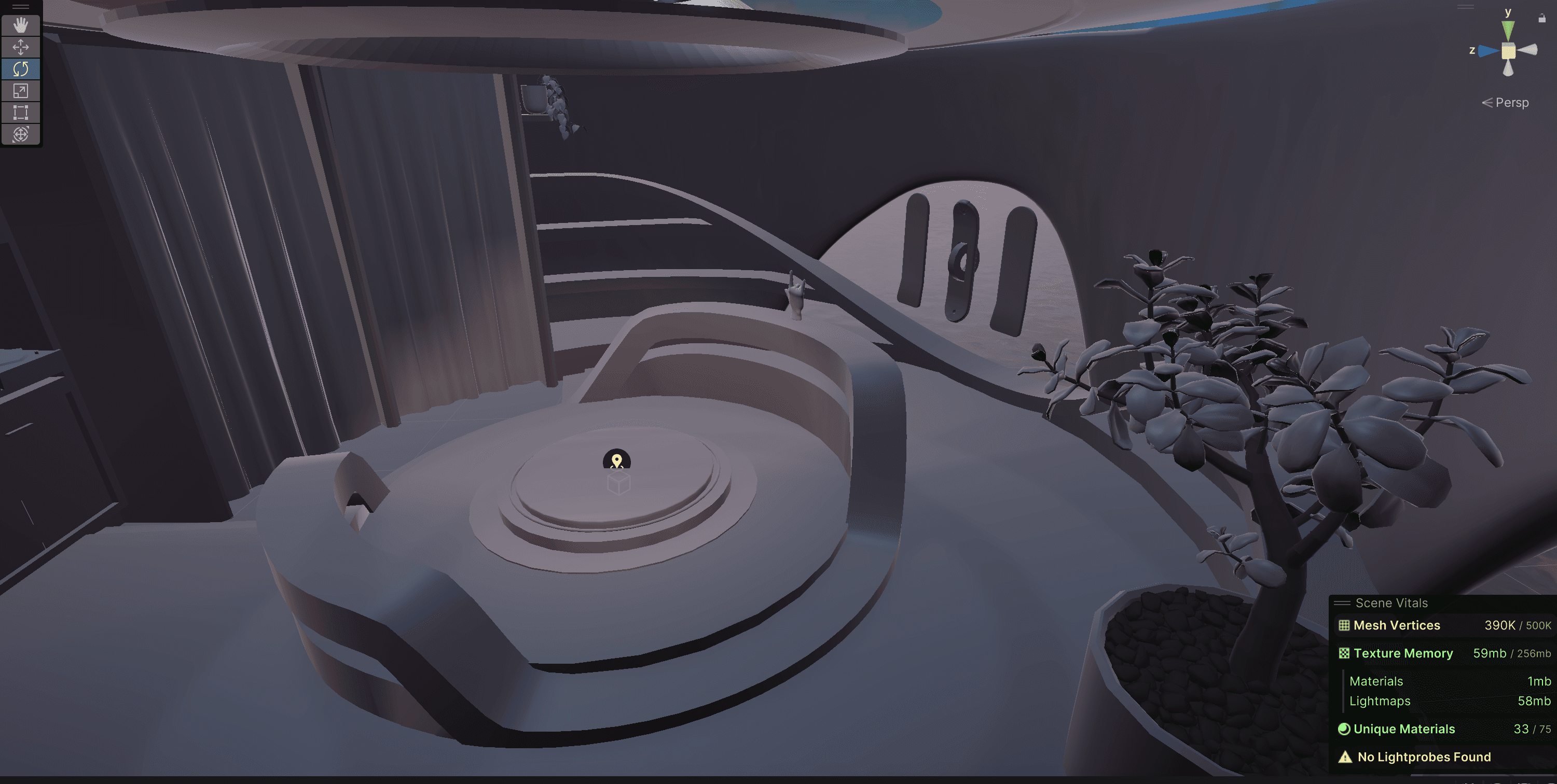
Initial Greyboxing of the 3D space to better understand spacing, positioning, and Ui layout.
Animation created by Yoonwoo Lee to inform art direction and interactive design before production.
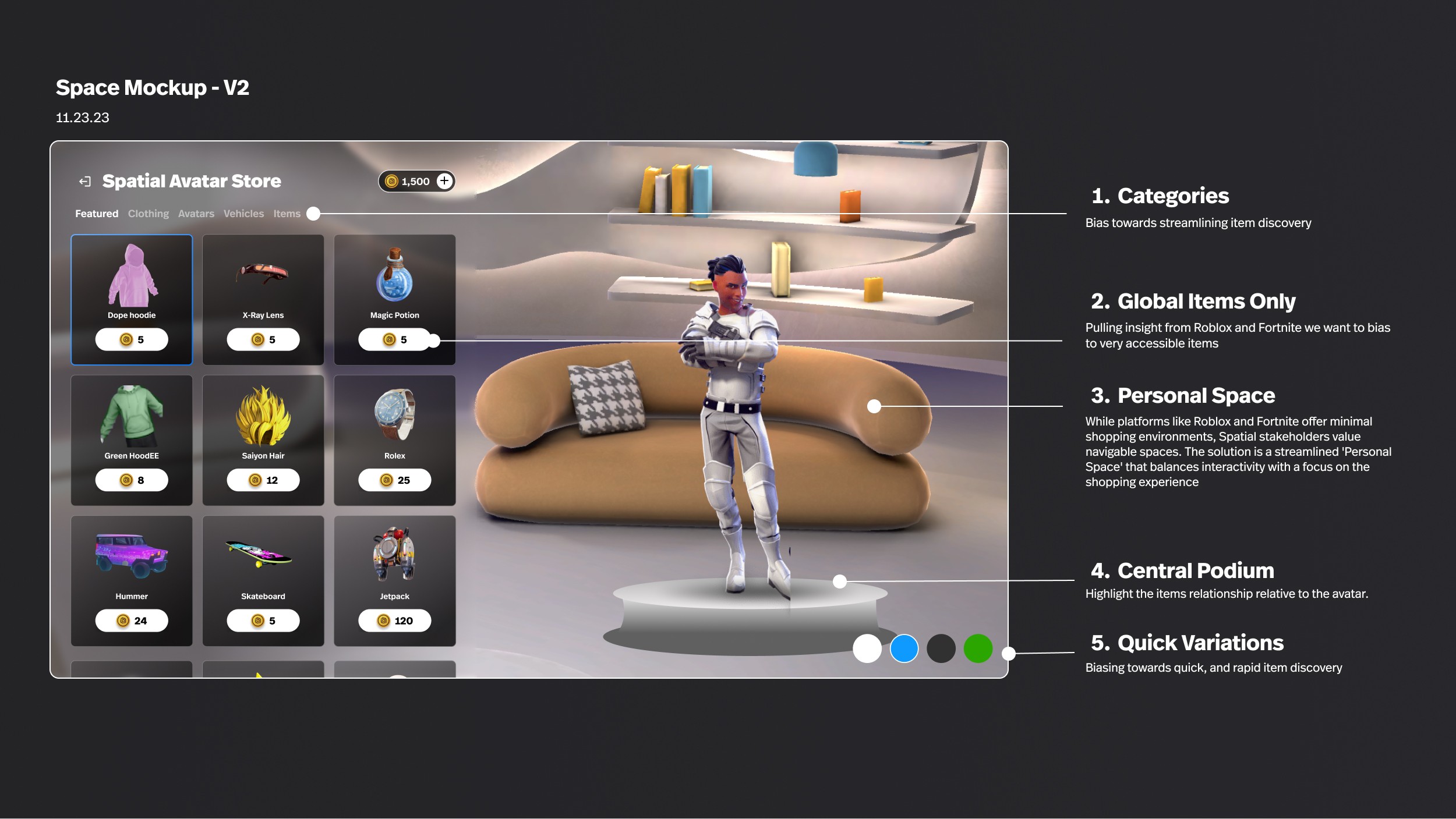
Texturing, lighting, and game development all occurred within Unity game engine.
Revised architecture after initial grey box feedback.
Initial Greyboxing of the 3D space to better understand spacing, positioning, and Ui layout.
Animation created by Yoonwoo Lee to inform art direction and interactive design before production.
Texturing, lighting, and game development all occurred within Unity game engine.
Revised architecture after initial grey box feedback.
Initial Greyboxing of the 3D space to better understand spacing, positioning, and Ui layout.
Animation created by Yoonwoo Lee to inform art direction and interactive design before production.
Texturing, lighting, and game development all occurred within Unity game engine.
Revised architecture after initial grey box feedback.
Initial Greyboxing of the 3D space to better understand spacing, positioning, and Ui layout.
Animation created by Yoonwoo Lee to inform art direction and interactive design before production.
Playtesting Feedback
90%
"What am I supposed to do when entering?"
Focus on the user's attention by auto-prompting the store when entering the space.
70%
"These items are not worth the money."
Introduce tiered pricing to help users compare assets relative to each other vs comparing items relative to external assets.
50%
"I wish there were categories"
Introduced categories and bundles following POC deployment to production.
Proof of Concept
The initial concept built by the design team and pitched to the team at large.
Never. Stop. Creating.
Never. Stop. Creating.
Impact
%
Increased retention of visitors who engage in game loop.
%
boost in retention for spaces featuring grind currency.
2x
Total payouts to ~800 creators over 1 year.
Takeaways
Prototypes are not only valuable for pre-visualization but also for inspiring the engineering for development.
Stakeholder buy-in increases as you emphasize the value the project brings to each stakeholder.
Even in a lead role, support is essential. Regular consultations with game developers and other PMs would have provided valuable insight into project timelines.