
Case Study
Spatial Creator Economy
Context
Spatial is a cross-platform creation tool that empowers businesses and individuals to build, monetize, and distribute digital experiences across web and mobile.
Description
In Q1 2023, Spatial identified a critical problem: businesses and individuals were leaving the platform due to low ROI on their digital experiences.
Data science analysis and user interviews identified two key insights: first, low monetization stemmed from low visitor retention; and second, experiences with gamification outperformed others by 7x ( 28 minutes as compared to 4 minutes).
This sparked a six-month initiative to build infrastructure to improved client ROI by incentivizing more gamified experiences.
Role
Lead Product Designer
Timeline
Q1 23' - Q2 23'
Company
Team
Designer(s)
Jayson Hahn
Peter Ng (PM)
2
PDs
Designer(s)
Jeff Huang (Web)
Dongphil Yoo (Web)
Benji Lightstone (Mobile)
Kevin Tong (Unity)
5
ENG
Stack

Figma

After Effects
Impact
12x Visitor Retention
Case Study
Spatial Creator Economy
Context
Spatial is a cross-platform creation tool that empowers businesses and individuals to build, monetize, and distribute digital experiences across web and mobile.
Description
In Q1 2023, Spatial identified a critical problem: businesses and individuals were leaving the platform due to low ROI on their digital experiences.
Data science analysis and user interviews identified two key insights: first, low monetization stemmed from low visitor retention; and second, experiences with gamification outperformed others by 7x ( 28 minutes as compared to 4 minutes).
This sparked a six-month initiative to build infrastructure to improved client ROI by incentivizing more gamified experiences.
Role
Lead Product Designer
Timeline
Q1 23' - Q2 23'
Company
Team
Designer(s)
Jayson Hahn
Peter Ng (PM)
2
PDs
Designer(s)
Jeff Huang (Web)
Dongphil Yoo (Web)
Benji Lightstone (Mobile)
Kevin Tong (Unity)
5
ENG
Stack
Figma
After Effects
Impact
12x Visitor Retention
SAN FRANCISCO, CA
COPYRIGHT JAYSon.STUDIO 2025
Inventory System

0:00/1:34
In-Space Store

0:00/1:34
Platform Currency

0:00/1:34
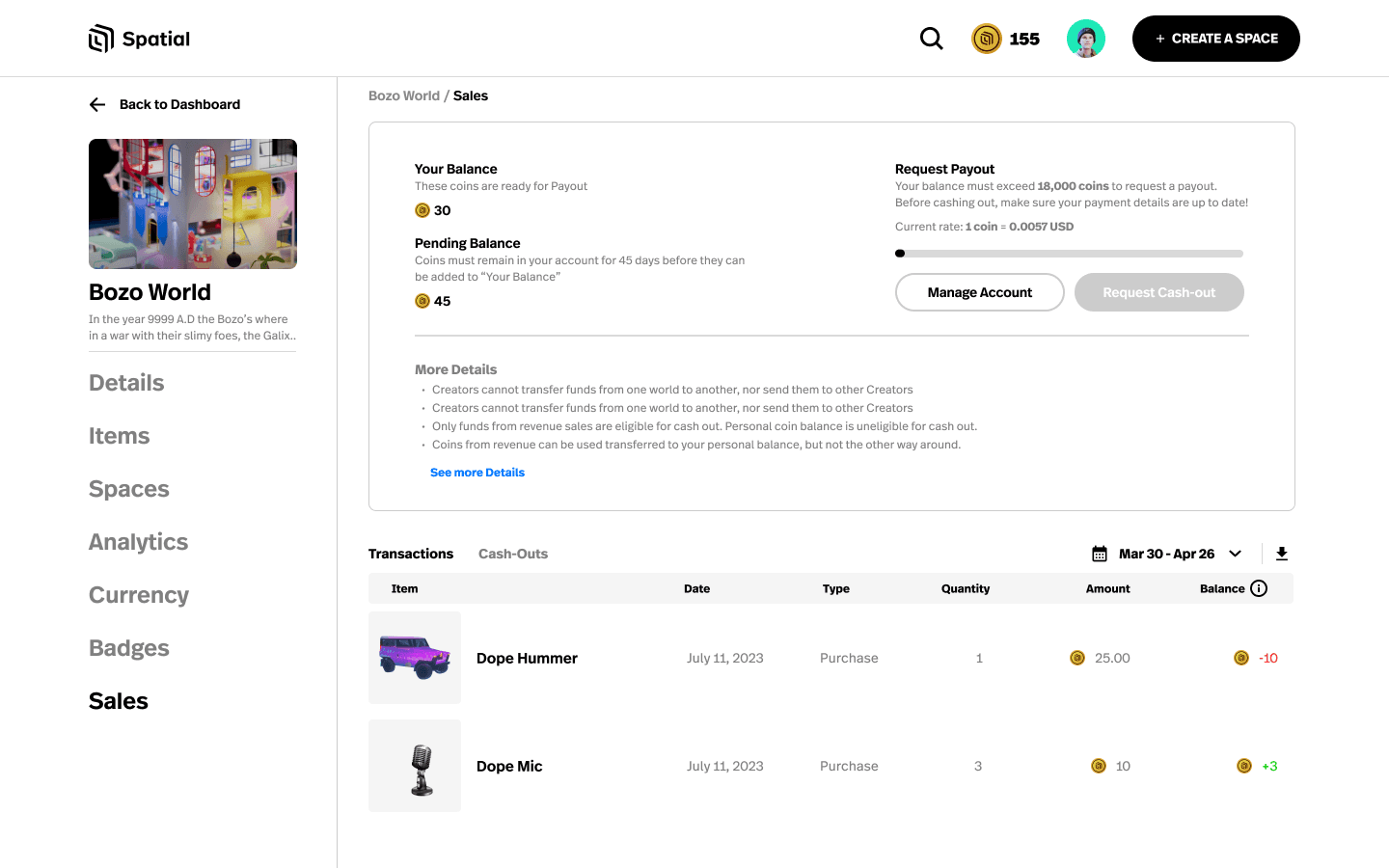
Creator Studio
0:00/1:34
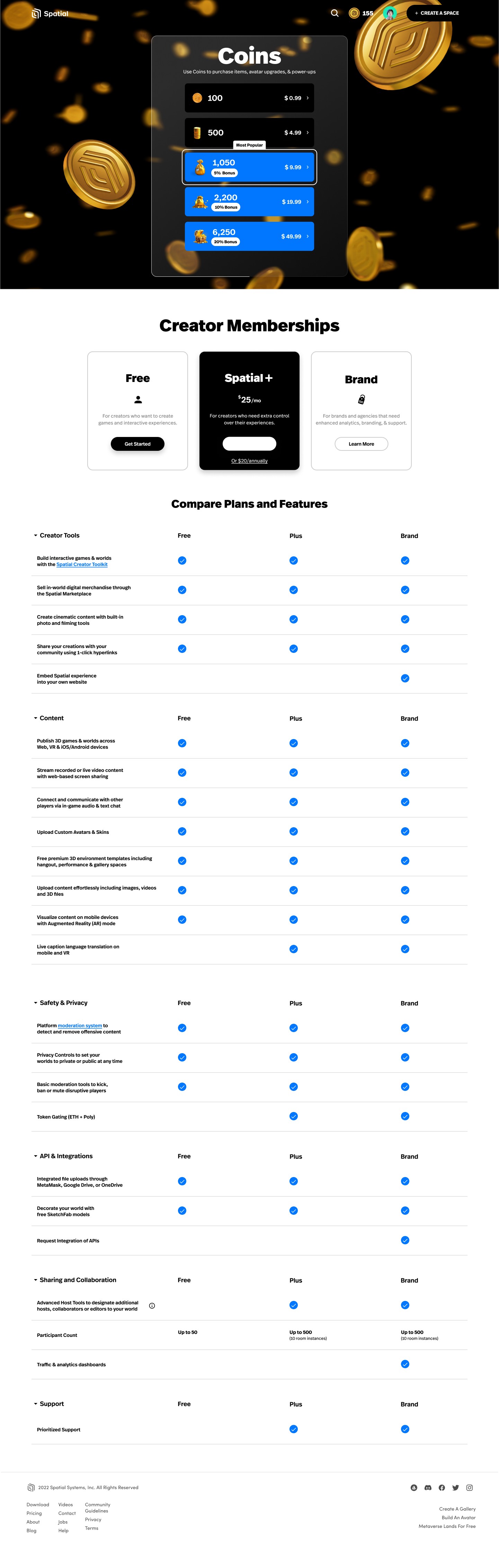
Spatial Coins
0:00/1:34
Spatial Studio
0:00/1:34
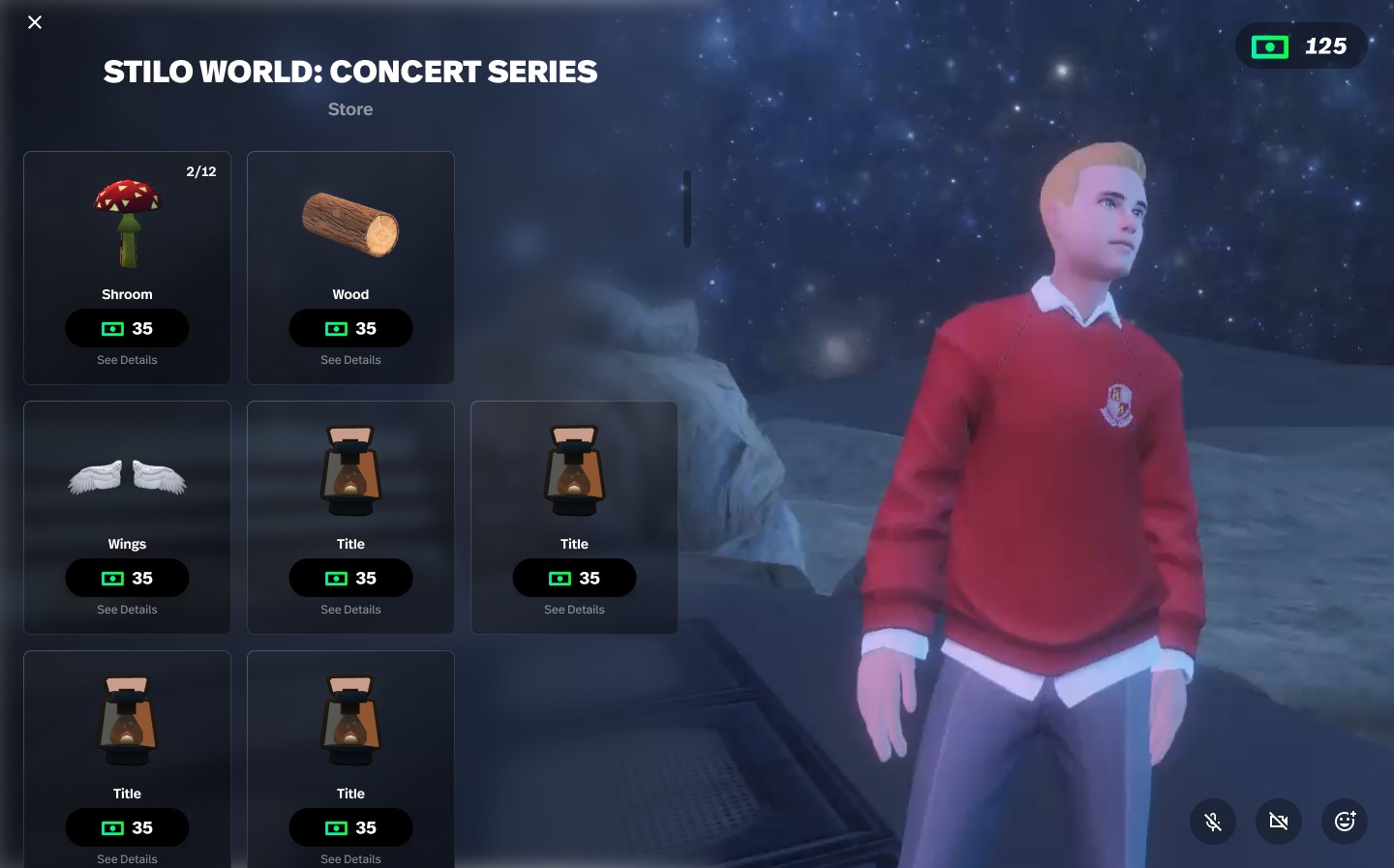
In-Space Store
0:00/1:34
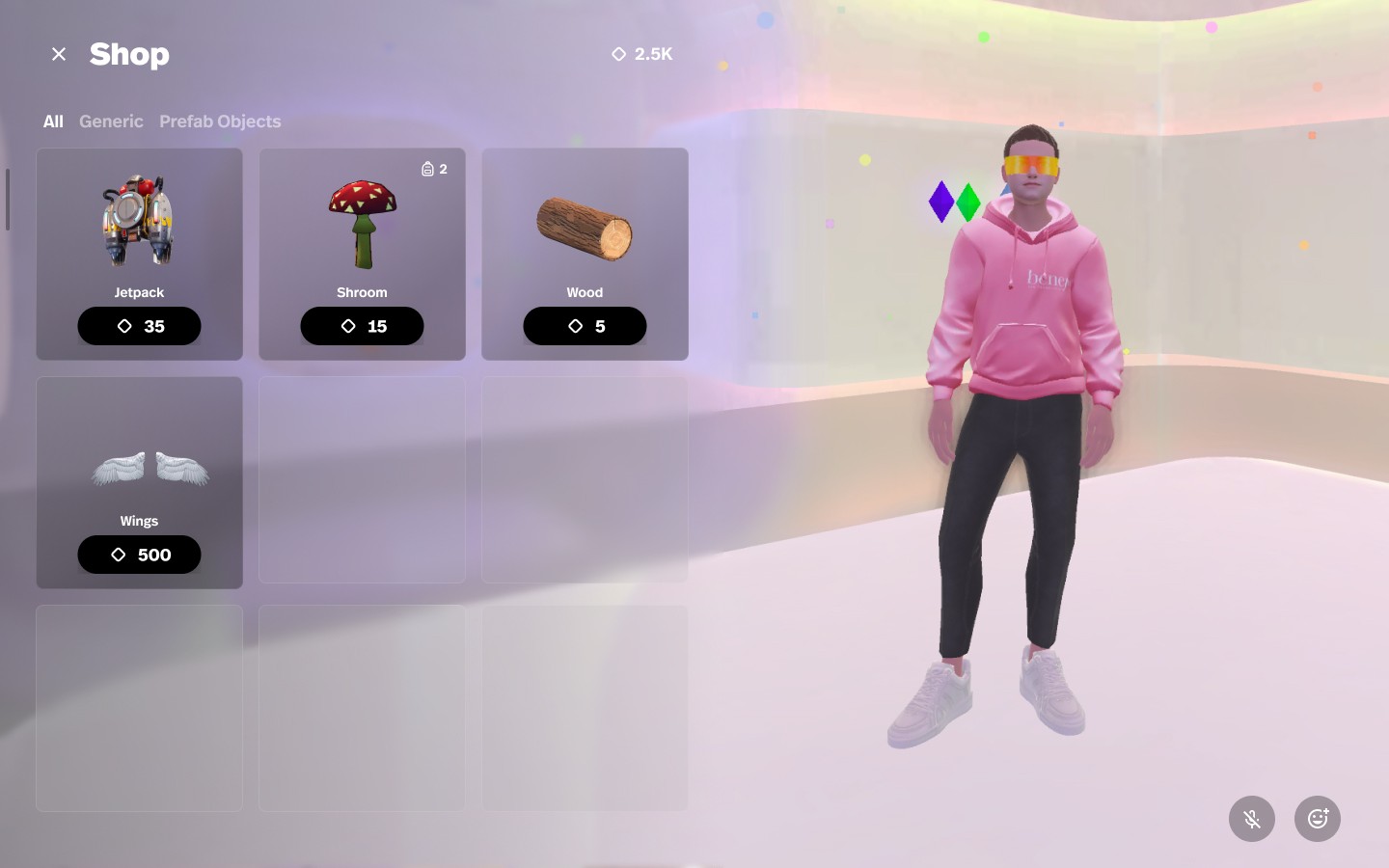
Backpack
0:00/1:34
Spatial Coins
0:00/1:34
Spatial Studio
0:00/1:34
In-Space Store
0:00/1:34
Backpack
0:00/1:34
Spatial Coins
0:00/1:34
Spatial Studio
0:00/1:34
In-Space Store
0:00/1:34
Backpack
0:00/1:34
Spatial Coins
0:00/1:34
Spatial Studio
0:00/1:34
In-Space Store
0:00/1:34
Backpack
0:00/1:34
Spatial Coins
0:00/1:34
Spatial Studio
0:00/1:34
In-Space Store
0:00/1:34
Backpack
0:00/1:34
Spatial Coins
0:00/1:34
Spatial Studio
0:00/1:34
In-Space Store
0:00/1:34
Backpack
0:00/1:34
Spatial Coins
0:00/1:34
Spatial Studio
0:00/1:34
In-Space Store
0:00/1:34
Backpack
0:00/1:34
Spatial Coins
0:00/1:34
Spatial Studio
0:00/1:34
In-Space Store
0:00/1:34
Backpack
0:00/1:34
Pain Point
Businesses and individuals are leaving the platform due to low monetary ROI on their digital experiences.
Information Gathering
Experiences utilizing gamification have a 7x higher Day-1 and Day-7 retention compared to those that do not.
Goal
Develop infrastructure needed to help creators earn more from their spaces while also encouraging the creation of more spaces with games.
Phase 1
Infrastructure to build more games.
Phase 2
Ability to monetize games.
Phase 3
Maintenance and port to mobile
Competitive Analysis
What economies are creators familiar with today, and how can we learn from them?
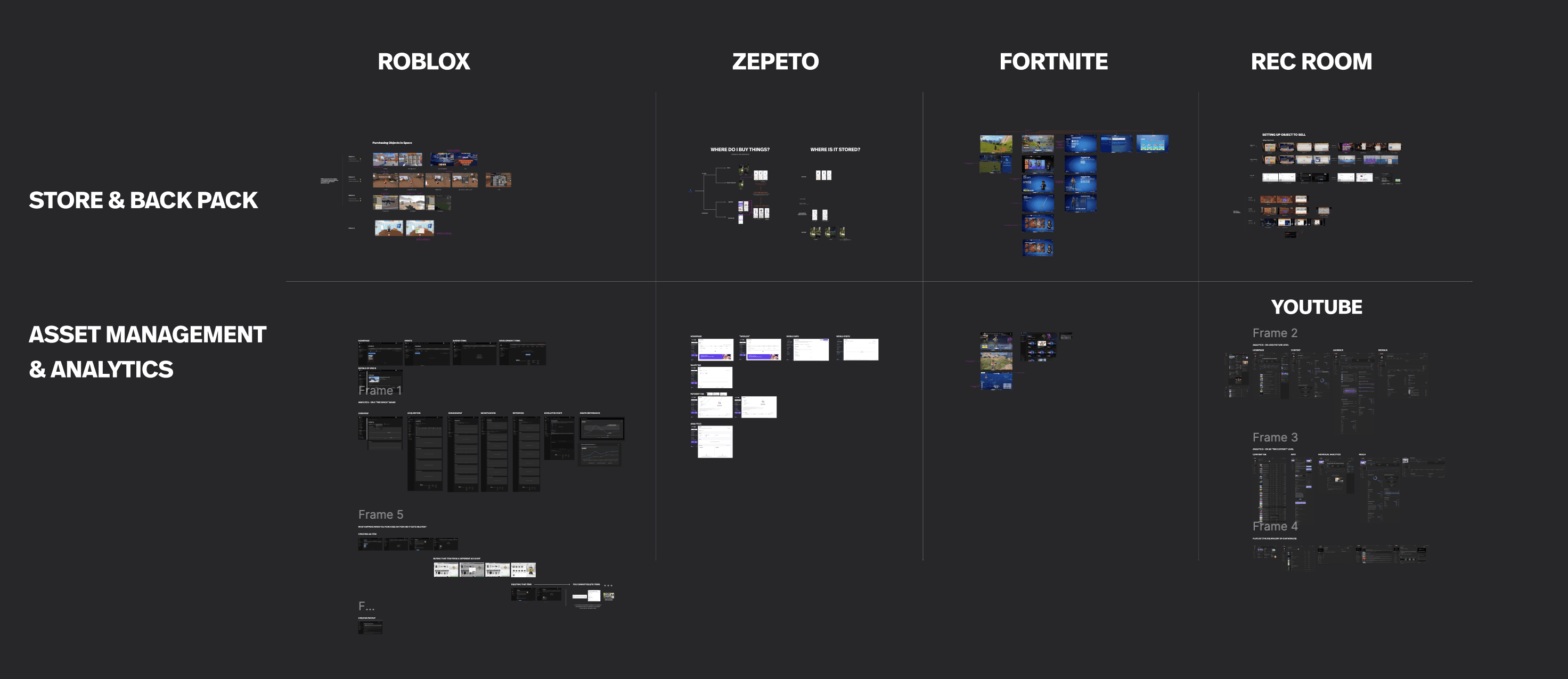
Audit of popular platforms with creator economies.
Insights
Asset Management — Creator Payout Models Are Already Settled
Unlike the contested areas below, asset management and creator payouts show strong alignment across Zepeto, Fortnite, and YouTube. Their shared structure is the safe path to follow — mirroring their established behavior reduces risk and meets creator expectations.
Backpack - Dual-Layer Inventory Is the Emerging Standard
The market splits on inventory architecture. Roblox and Rec Room run a two-tier model, pairing a global store and inventory (items that travel across every experience) with local ones (items confined to a single experience). Zepeto and Fortnite take the simpler route, supporting only a single global store and inventory
Marketplace - Less Immersive Shopping Wins. No Creator Attribution.
Shopping UX has clearly converged: Fortnite, Roblox, and Zepeto all halt player movement and let the store occupy 60–75% of the screen, signaling that an more constrained, focused shopping experience is the pattern worth mimicking. The one practice that hasn't standardized is surfacing the creator behind an item.
Development
Phase 1
Provide creators with the ability to introduce more games into their spaces.
V1 prototype showcasing how creators can manage items and assign properties.
V1 prototype demonstrating how visitors are rewarded with items.
V1 prototype exploring how ALL rewarded items are available in the backpack.
V1 prototype showcasing how creators can manage items and assign properties.
V1 prototype demonstrating how visitors are rewarded with items.
V1 prototype exploring how ALL rewarded items are available in the backpack.
V1 prototype showcasing how creators can manage items and assign properties.
V1 prototype demonstrating how visitors are rewarded with items.
V1 prototype exploring how ALL rewarded items are available in the backpack.
V1 prototype showcasing how creators can manage items and assign properties.
V1 prototype demonstrating how visitors are rewarded with items.
V1 prototype exploring how ALL rewarded items are available in the backpack.
Phase 2
Provide creators with the ability to monetize their creations.
Walkthrough of store prototype & the impact it had on engineering enthusiasm.
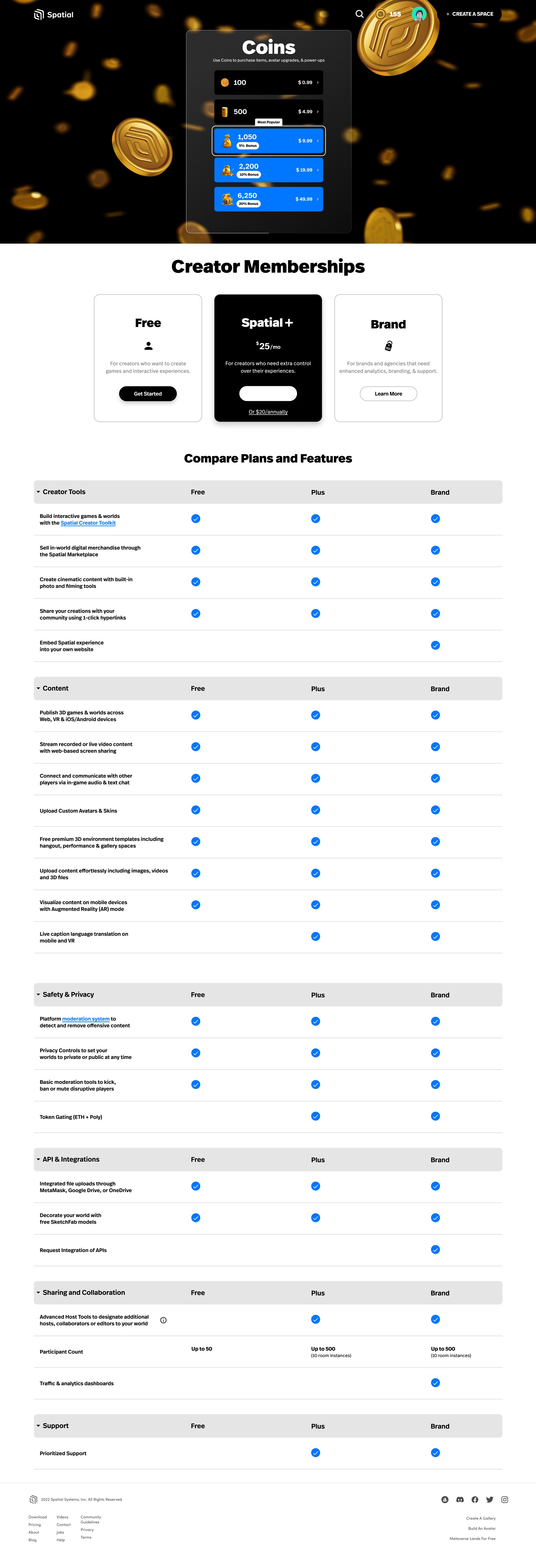
Prototype for Spatial Coins - feel free to scroll.
Creator payouts and item sales.
Walkthrough of store prototype & the impact it had on engineering enthusiasm.
Prototype for Spatial Coins - feel free to scroll.
Creator payouts and item sales.
Walkthrough of store prototype & the impact it had on engineering enthusiasm.
Prototype for Spatial Coins - feel free to scroll.
Creator payouts and item sales.
Walkthrough of store prototype & the impact it had on engineering enthusiasm.
Prototype for Spatial Coins - feel free to scroll.
Creator payouts and item sales.
Dogfooding Feedback & Updates
90%
"Users are confused when navigating different locations for for items."
Simplify the inventory system by consolidating all rewarded items, both global and local, into one backpack.
70%
"Users expect different items to have different abilities"
Introduce four item types—Avatar, Avatar Animation, Prefab Objects, and Avatar Attachments—each with unique properties and capabilities.
50%
"Items need to be assigned to specific spaces within the studio."
Spatial Studio needs to better reflect the hierarchy that items live under specific spaces.
Impact
x
higher retention in spaces that include games.
x
higher production of spaces with games.
>
k
total payouts to ~800 creator over 6 months.
Takeaways
Prototypes are not only valuable for pre-visualization but also increasing stakeholder buy-in & inspiring the team.
Validate fast. We spent 6 months in development before dogfooding with users - leading to a lot of bugs and lessons. We should have tested sooner.
Your output should be treated as a product. Seek feedback not just on designs — but also presentation, file organization, and communication.